Our product
What’s 3PE Coated Steel Pipe?
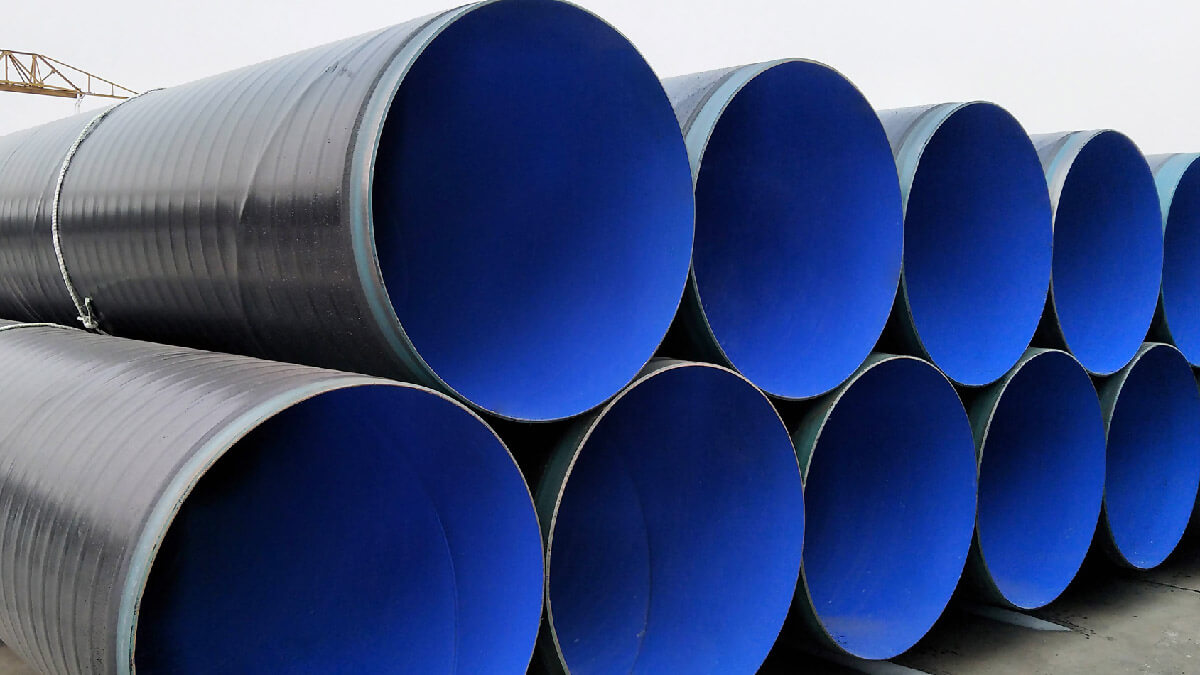
3PE Coated Steel Pipe (3-Layer Polyethylene) is a multilayer, high-performance anti-corrosion system. It is widely considered the “gold standard” for buried or submerged pipelines. The “3LPE” designation specifically refers to the three layers that work together to provide a robust shield:
- Layer 1 (Internal): Fusion Bonded Epoxy (FBE) for chemical bonding and corrosion resistance.
- Layer 2 (Middle): A copolymer adhesive that bonds the epoxy to the outer plastic.
- Layer 3 (External): A high-density polyethylene (HDPE) layer for mechanical protection.
Types of 3PE/3LPE Coatings
- Standard 3LPE: Using Polyethylene for general buried applications (service temperatures up to 70°C/80°C).
- 3LPP (3-Layer Polypropylene): Similar structure but uses Polypropylene for the outer layer, suitable for high-temperature environments (up to 110°C) and deeper offshore applications.
Advantages of Using 3PE Coated Pipe
- Exceptional Lifespan: Designed to protect pipelines for 50 years or more.
- High Mechanical Strength: The HDPE outer layer is extremely tough, resisting damage during transport, handling, and backfilling.
- Excellent Chemical Resistance: Highly resistant to acids, alkalis, and salts found in soil.
- Superior Adhesion: The triple-layer system prevents “cathodic disbondment,” ensuring the coating stays attached even if the outer layer is nicked.
Specifications of 3PE Coated Pipes
- Standards: DIN 30670, CAN/CSA Z245.21, AS 4321, NF A49-710.
- Pipe Diameter Range: 88.9mm to 2020mm.
- Coating Thickness: Typically 1.8mm to 4.7mm (depending on pipe diameter and project requirements).
3PE Coating Manufacturing Process
- Surface Preparation: The bare pipe is blast-cleaned to a “Near-White” finish (Sa 2.5) to ensure maximum adhesion.
- Induction Heating: The pipe is heated to the required application temperature (usually 200°C–220°C).
- Epoxy Application: FBE powder is electrostatically sprayed, melting onto the hot pipe.
- Adhesive & PE Wrapping: While the epoxy is still tacky, the adhesive and polyethylene layers are extruded and wrapped spirally around the pipe.
- Water Cooling: The coated pipe is quenched in water to solidify the layers instantly.